 +38 (050) 777 03 93


The Potential of the Logistics Industry in the Era of Globalization
The logistics industry is rapidly evolving due to technological breakthroughs, the globalization of trade, and growing demand for fast and accurate deliveries. Efficient logistics has become an integral part of modern business success, ensuring timely delivery of goods and cost reduction. Year after year, automation, digitalization, and sustainable technologies are emerging as key drivers in the development of the sector.
Experts at Dolever have conducted an in-depth analysis of current trends and are ready to share their findings. In this article, you will learn about the innovations dominating the global stage, their impact on Ukrainian logistics, and the opportunities that advanced technologies offer to companies. We will explore how sustainability, automation, and digital integration are transforming logistics, setting new standards of efficiency.

Global Trends in Logistics
The global logistics sector is actively adapting to modern challenges by implementing innovations that influence the entire industry. Increasing environmental responsibility, the advancement of automation and robotics, and the integration of digital technologies are redefining supply chain management. These trends create opportunities for companies aiming to remain competitive amidst global changes.
- Automation and Roboticsbr/>Robots and automated warehouses are becoming the standard. Autonomous trucks, delivery drones, and robotic packaging systems are increasing the speed and efficiency of logistics processes. Dolever offers automated scissor lifts that optimize warehouse processes, significantly reducing time and costs. Check out Dolever’s range of scissor lifts here.
- Digital Integration
The integration of big data, analytics, and artificial intelligence enables companies to make fast and well-informed decisions. These technologies allow businesses to forecast demand, optimize inventory, and reduce costs. - Blockchain for Transparency
Blockchain technologies create secure and transparent supply chains. They help reduce fraud, simplify customs clearance, and enhance trust among market participants. - Service Personalization
Consumers expect flexible solutions. Companies are providing specialized services, including express delivery and custom manufacturing of equipment tailored to specific client requirements. - Digital Twins
This technology allows the creation of digital models of physical objects for analysis and optimization. In logistics, digital twins are used for warehouse and route design, significantly improving efficiency.
Thus, modern trends are shaping new standards for global logistics, emphasizing the importance of adaptation and innovation. Companies that are the first to integrate these solutions gain competitive advantages by creating more efficient, cost-effective, and environmentally responsible systems.
The Current State of Ukrainian Logistics
In recent years, Ukraine’s logistics infrastructure has undergone significant changes, reflecting the challenges and opportunities for businesses. Logistics remains a critical component of the economy, ensuring the efficiency of goods turnover both within the country and with international partners. However, the war and economic instability have significantly impacted traditional logistics processes, necessitating adaptation.
The destruction of infrastructure and port blockades have created serious challenges for the transport network. Rail and road transportation, in particular, have experienced significant overloads, forcing companies to seek new ways to optimize. The loss of control over some maritime routes has added complexity to international shipping management but has also opened new opportunities for the development of alternative routes, such as the Danube cluster or the Trans-Caspian corridor.
Despite these difficulties, Ukrainian logistics demonstrates significant potential for recovery and growth. Innovation, digitalization, and international cooperation are becoming key directions for adapting the industry to new realities. At the same time, the development of multimodal transportation and the strategic integration of logistics services could position Ukraine as a vital transit hub in Europe after the war.
Logistics During the War: Challenges and Innovations
The war has profoundly impacted Ukrainian logistics, creating numerous challenges for businesses. The main difficulties include:
- Infrastructure destruction: Damage to roads, bridges, railways, and logistics centers.
- Port blockades: Loss of export opportunities through the Black Sea, forcing companies to redirect cargo to other routes.
- Overloaded land transport: A significant increase in volumes transported by rail and roads.
- Labor shortages: Mobilization and emigration of specialists have created workforce deficits in the industry.
- Energy crisis: Power outages have complicated the operation of warehouses and transport networks.
Despite these challenges, the war has driven the development of innovative solutions:
- Development of multimodal transportation: Combining various modes of transport to ensure continuity of supply chains.
- Trans-Caspian corridor: A new, secure, and competitive route for cargo transportation.
- Digitalization: Implementation of automated management systems, blockchain, and artificial intelligence to optimize logistics processes.
- Creation of new logistics hubs: Particularly in Poland and Romania to support the transit of Ukrainian goods.
- Energy-efficient solutions: Adapting warehouses and transportation systems to power supply disruptions.
Innovations not only help maintain the functionality of the logistics system but also lay the foundation for its recovery and future development. Despite the difficulties, the industry demonstrates resilience and offers promising prospects for international integration and efficient management.
Automation as the Key to Efficiency: Benefits, Examples, and Solutions
The modern business world is undergoing significant changes driven by technological advancements, and automation has become one of the most crucial tools facilitating these transformations. Its implementation allows companies to achieve a much higher level of efficiency while opening new opportunities to enhance competitiveness. Automation simplifies and optimizes processes that previously required substantial resources and significantly reduces costs. In the transportation and logistics sector—cornerstones of global trade and international supply chains—these advantages are particularly impactful.
Modern automated systems offer solutions to some of the most pressing challenges businesses face:
- Cost Reduction. By automating processes that replace labor-intensive manual operations, companies can significantly reduce the number of errors caused by human factors. This, in turn, lowers costs associated with fixing mistakes and paying penalties for late or incorrect actions.
- Increased Operational Speed. Technologies like artificial intelligence and automated algorithms accelerate processes such as order processing, warehouse operations optimization, and route planning.
- Resource Optimization. Automated platforms allow for more rational allocation of human resources, redirecting them toward strategic tasks that require creative or analytical approaches.
Examples of Automation in Logistics
One of the most vivid examples of successful automation is the implementation of transportation management systems (TMS) by leading market players. For instance, industry giants like CH Robinson invest billions of dollars in developing automated systems. These include integrating vast datasets, analytics-based forecasting, and optimizing logistics operations. Another example is the integration of GPS systems with warehouse management software, enabling automated cargo delivery tracking and minimizing the risk of delays.
How We at Dolever Support Automation
At Dolever, we actively work on developing and implementing advanced solutions to automate logistics processes. We offer our clients innovative tools that provide full control over their operations. These tools help reduce costs and increase enterprise productivity. Our equipment enables businesses to maintain high levels of efficiency even during peak periods. For example, our leveling platforms have an intuitive control system that significantly reduces the time required to process goods. Learn more about Dolever’s leveling platforms here.
The Future of Automation
Technology is advancing at a rapid pace, and in the coming years, automation will become even more accessible to companies of all sizes. New solutions, such as autonomous vehicles and more advanced artificial intelligence systems, will unlock even greater opportunities for optimization. These innovations will not only reduce business operating costs but also provide companies with the flexibility needed to adapt to the constantly changing market conditions.
Thus, automation is no longer just a passing trend but a vital necessity for those aiming to stay at the forefront of the industry. It is a strategic move that allows businesses to focus on growth and development, leaving routine tasks to technology.
Logistics Trends in 2025
- Digital Transformation and Automation
Cloud platforms, machine learning, and generative artificial intelligence (GenAI) will continue to optimize key logistics processes such as inventory management, route optimization, and warehouse automation. Integrated solutions will reduce complexity and enhance operational efficiency by minimizing errors and costs. - Data-Driven Decision-Making
Big data and predictive analytics will become essential tools for route planning, demand forecasting, and reducing environmental impact. Accurate predictions will help minimize downtime, cut expenses, and improve service quality. - Real-Time Monitoring
With IoT and 5G technologies, companies will achieve full supply chain visibility. Real-time vehicle monitoring will enable rapid responses to issues, improving resource management and delivery timelines. - Flexible Supply Chains
The growing demand for personalized delivery will drive the adoption of multimodal transportation and innovations such as drones and autonomous vehicles. Flexibility will allow companies to adapt to demand fluctuations without sacrificing efficiency. - Use of Digital Twins
Simulating warehouses and logistics processes through digital twins will help identify inefficiencies and optimize resources. This approach will enhance strategic flexibility in decision-making. - Development of Robotic Process Automation (RPA)
Software robots will automate repetitive tasks, such as product tracking and documentation generation. RPA will increase the speed and accuracy of logistics operations while reducing costs. - Innovations in Inventory Management
Drones will be used for warehouse inventory audits, providing real-time accurate data. This will minimize human error and accelerate stock control. - Cloud Computing
SaaS solutions will become the standard in logistics operations, offering access to management tools from any device. Cloud technologies will reduce infrastructure costs and improve data security. - Enhanced Transparency for Customers
Through automated ETA updates and cargo tracking, transparency will improve customer trust and ensure regulatory compliance.
These trends are shaping a more automated, sustainable, and consumer-focused logistics ecosystem where flexibility and digitalization are key competitive advantages.
Key Trends in the Development of Warehouse Logistics in Ukraine
Warehouse logistics is a critical link in the supply chain system, essential for the functioning of modern businesses. Its importance is especially pronounced in the context of Ukraine’s dynamically evolving economy, where competitiveness and flexibility have become key factors for market survival. Current trends reflect the modern challenges faced by enterprises and establish new standards for operations in this sector.
Below are the main directions and trends influencing warehouse logistics in Ukraine:
| Directions | Trends |
| Technological | The development and implementation of innovative technologies for warehouse operation automation, including the creation of smart warehouses utilizing robots and IoT. |
| Informational | Comprehensive digitalization of logistics processes, integration of information systems, development of the Internet of Things (IoT), cloud computing, and interactive platforms. |
| Organizational | The creation of new logistics platforms, integration alliances, development of regional clusters, and standard unification for efficient interaction among market participants. |
| Managerial | Reengineering of warehouse technologies and business processes, transformation of management philosophy, transition to network structures, and automation of decision-making. |
| Financial | Attracting innovative financing sources, investing in the construction of modern warehouse infrastructure, and developing public-private partnerships. |
Challenges and Opportunities
Alongside the development of new technologies, warehouse logistics faces a number of challenges that require immediate solutions. For instance, the complexity of integrating new systems with outdated platforms, the lack of qualified personnel to manage automated warehouses, and the high initial costs of implementing innovations. However, these challenges also create new opportunities for businesses. Investing in employee education, adapting international best practices, and implementing government incentives for warehouse modernization can significantly accelerate the industry’s transformation.
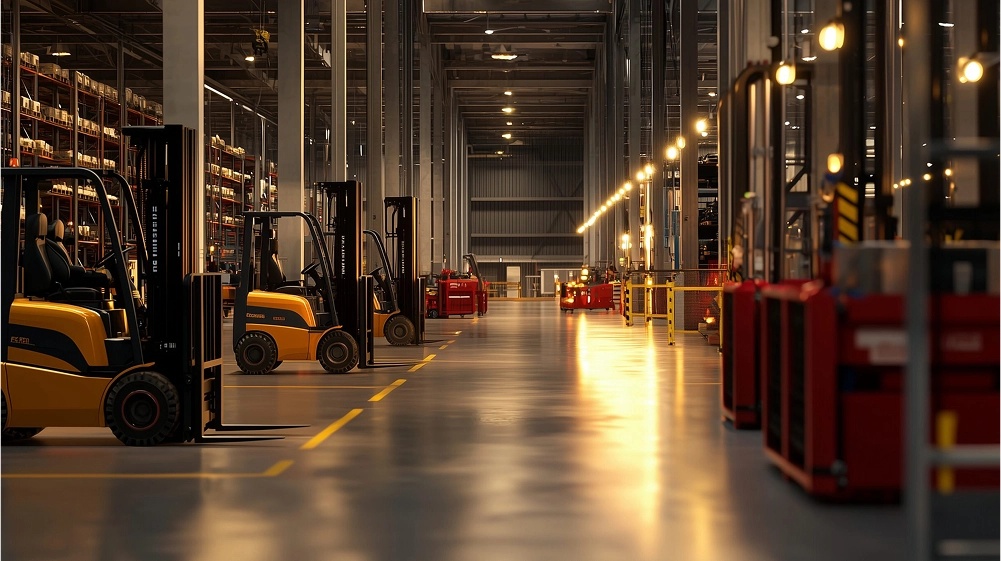
Thus, warehouse logistics in Ukraine stands on the brink of significant changes driven by technological breakthroughs, global trends, and the need to adapt to market conditions. Its future development will depend on the ability of businesses to implement innovative approaches, adapt business processes to modern requirements, and leverage the opportunities provided by new technologies. Effective warehouse logistics will not only serve as a source of competitive advantage for businesses but also as a crucial element of Ukraine’s stable economic growth.
Green Logistics
Environmental initiatives in logistics play a crucial role in today’s world as companies increasingly recognize the necessity of adopting eco-friendly technologies. One of the key directions is the transition to electric vehicles, which significantly reduce CO2 emissions. Logistics operators are increasingly choosing electric vehicles as their primary means of delivery, which not only reduces environmental impact but also lowers fuel costs. Additionally, the use of biofuels and alternative energy sources has become an important element of many companies’ sustainability strategies.
Optimizing delivery routes is another key aspect. Through the implementation of artificial intelligence systems and analytical platforms, companies can predict road congestion, avoid traffic jams, and reduce empty mileage. This not only decreases harmful emissions but also enhances transportation efficiency. In major cities where traffic issues are particularly severe, such measures help reduce transport-related burdens and contribute to environmental balance. Such initiatives are supported at the governmental level, including subsidies for electric vehicles and the introduction of EU Green Deal standards.
Dolever: Sustainability in Production
Dolever, a company specializing in lifting mechanisms, actively incorporates the principles of green logistics into its operations. Its sustainability strategy spans the entire value chain—from equipment design to final delivery to customers. Dolever extensively uses recycled and biodegradable materials in its product manufacturing, reducing waste and promoting a circular economy. Our mobile ramps help to reduce energy costs for loading and unloading goods thanks to their optimized design and quick assembly. Learn more about them on our website.
Additionally, Dolever implements automated warehouse management systems that minimize energy consumption and reduce environmental impact. This approach not only aligns with modern environmental standards but also enhances competitiveness in the market. These initiatives serve as an example for other businesses, demonstrating that sustainable development and economic efficiency can go hand in hand.
Why Choose Dolever?
- Certified Quality: All our products meet the highest international standards, as confirmed by compliance certificates.
- Maximum Reliability: Our products are designed for long-term use, ensuring cost-efficiency and stability.
- Personalized Approach: We consider the needs of each client and provide tailored solutions.
- Extended Warranty: 60 months with regular servicing (standard warranty is 24 months).
- Comprehensive Support: From equipment selection to installation and maintenance, we are with you at every step.
By choosing Dolever, you’re getting more than just equipment—you’re gaining support and innovative solutions that will contribute to your success.
Place Your Order Today!
Stop postponing your business improvements until tomorrow! Take the first step toward optimizing your logistics processes right now. Our team of experts is ready to consult you and select the best solution for your business.